
'/%3e%3cdefs%3e%3clinearGradient%20id='paint0_linear_977_6102'%20x1='0'%20y1='0'%20x2='0'%20y2='1186'%20gradientUnits='userSpaceOnUse'%3e%3cstop%20stop-color='%23FAFBFB'%20stop-opacity='0.01'/%3e%3cstop%20offset='1'%20stop-color='%23F3F7FC'/%3e%3c/linearGradient%3e%3c/defs%3e%3c/svg%3e)

How does paid parking work in the Netherlands?
Paid parking is part of the daily street scene in many Dutch cities and villages. But why do you have to pay in one place and not in another? How do you know exactly what the rules are? And what is the most convenient way to pay for your parking session?
In this article, we explain the basics of paid parking in the Netherlands, so you know exactly what to expect when you park your car.
Why do we have paid parking?
Municipalities do not introduce paid parking for no reason. The main goal is to keep parking pressure manageable. By charging a parking fee, cars generally stay in the same place for less time.
This ensures better traffic flow. As a result, there is a much greater chance that shoppers, residents, and local entrepreneurs can actually find a free parking space in busy areas, such as inner cities and around hospitals or train stations.
How do you know if you have to pay for parking?
Each municipality determines for itself where paid parking applies, what rates apply, and on what days and times payment is required. Even within a single city, the rules can differ per neighborhood.
Therefore, always check the traffic signs or the information on the nearest parking meter. This always indicates the following:
The times when paid parking applies (e.g., Mon to Sat from 09:00 - 21:00).
The zone code (a short number, essential if you use a parking app).
The maximum parking duration (in some streets, you may only park for a maximum of 1 or 2 hours).
How do you pay for your parking spot?
In the Netherlands, we use license plate parking almost everywhere. This means you no longer have to place a paper ticket behind your windshield. You simply enter your license plate number, after which parking enforcement officers digitally check whether you have paid.
There are two main ways to pay:
1. Via the parking meter
At the traditional street meter, you enter your license plate and pay in advance for the time you think you will need. Nowadays, you pay almost exclusively with your debit card (contactless); cash is no longer accepted in most municipalities.
2. Via a parking app (Mobile parking)
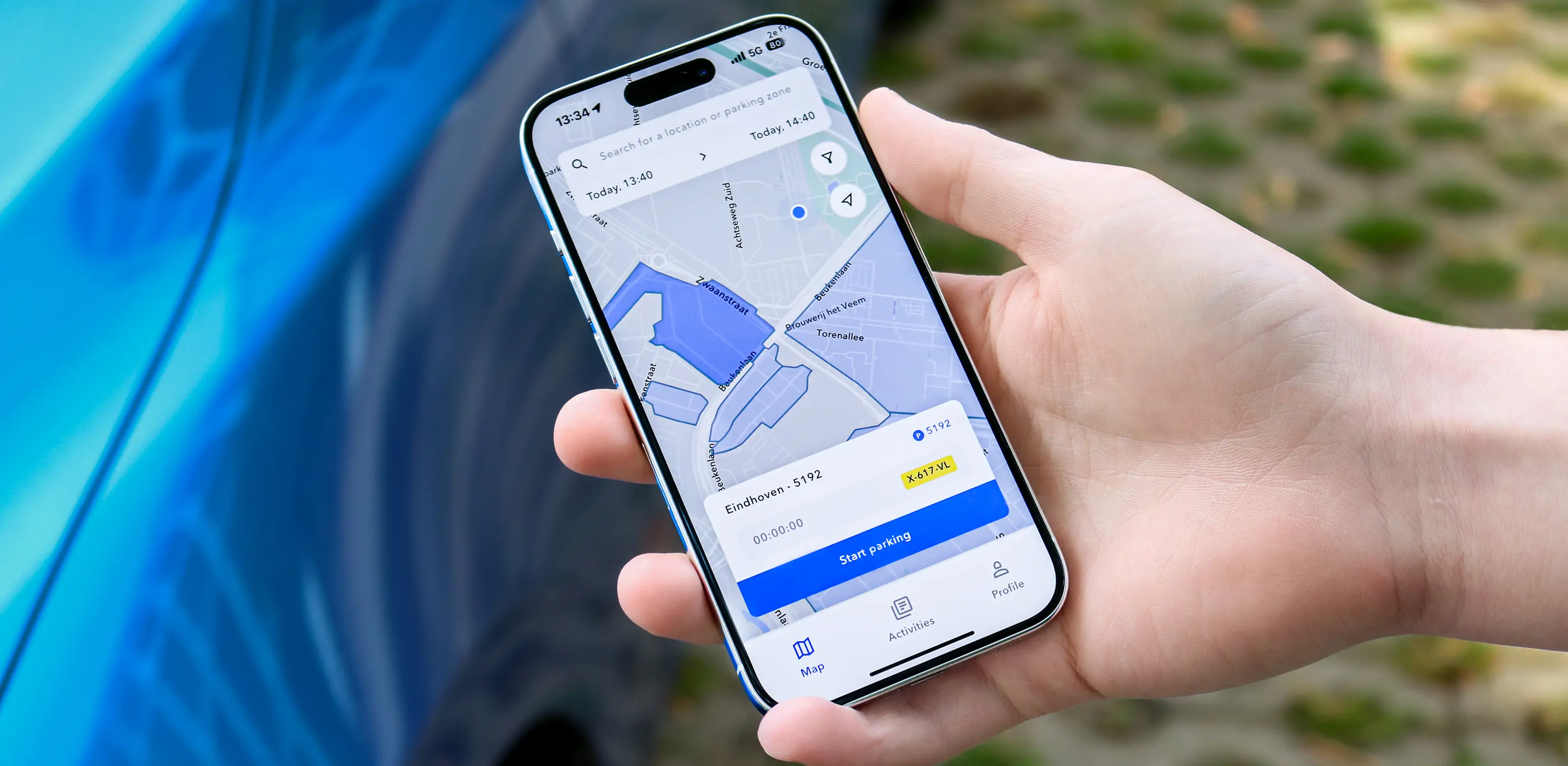
More and more drivers are opting for a parking app. Instead of guessing in advance how long you will be away, you start the parking session on your smartphone as soon as you arrive. When you return to your car, you stop the session again. As a result, you never pay for more time than you were actually parked.
Frequently asked questions about paid parking
Is paid parking the same in every municipality? No, this differs locally. Never just assume that parking on Sundays or in the evenings is free; always check the signs.
What is a parking zone? A parking zone is a specific area for which the same rates and times apply. Based on the zone code, systems immediately know which rate should be linked to your parking session.
Do I always pay for a full hour? At a parking meter, you often have to buy time in advance. If you use a parking app, you pay per minute parked in most cases.
How does SimplePark make paid parking easier?
The most frustrating thing about paid parking is estimating your parking time and searching for a working meter. SimplePark is designed to make that process as effortless as possible.
With the SimplePark app, you no longer have to search for a meter or rush because your time is almost up. As soon as you park, the app immediately recognizes which parking zone you are in via GPS. You confirm the zone code, start your parking session with the push of a button, and stop it again as soon as you drive away. You only pay for the actual parked time. Furthermore, you effortlessly keep track, because all parking costs are deducted monthly via one clear invoice or via an easy-to-use parking credit.
Are you looking for the easiest way to deal with paid parking? Download SimplePark and experience for yourself how much time and effort you can save.